Hybrid Solar Inverters: The Brain of Your Solar Energy System
- Share
- Issue Time
- Aug 14,2026
Summary
Hybrid solar inverters explained: how they work, key specs to check, and why they are the central component of any modern solar-plus-storage system.
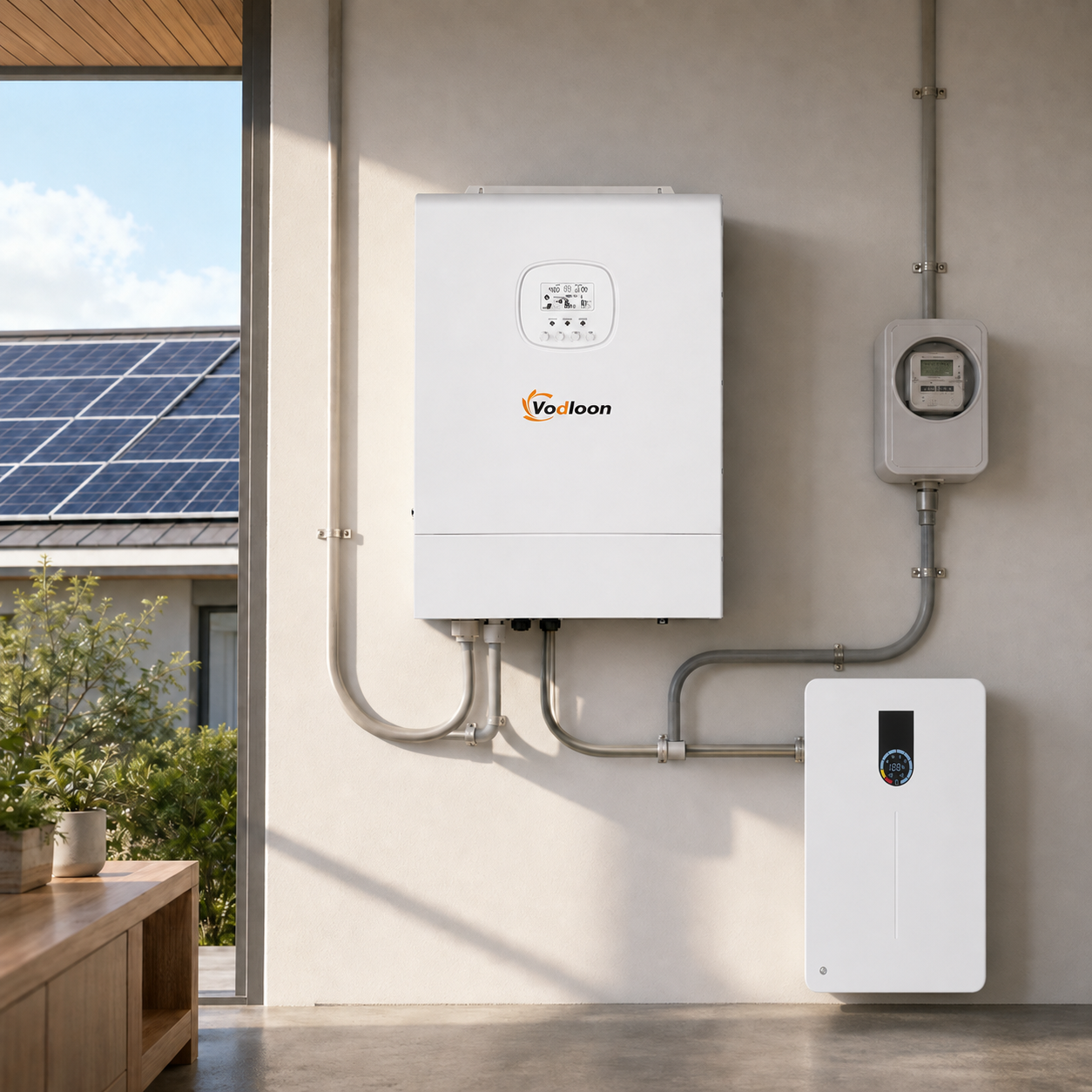
If the solar panels are the muscles of your system and the battery is the reservoir, the hybrid inverter is the brain. Understanding what it does — and what to look for — is essential for anyone investing in solar-plus-storage.
String Inverter vs Off-Grid Inverter vs Hybrid Inverter
Before diving into specs, it helps to understand how the three main inverter types differ:
| Feature | String Inverter | Off-Grid Inverter | Hybrid Inverter |
|---|---|---|---|
| Grid Connection | Yes (on-grid only) | No | Yes (on/off-grid) |
| Battery Support | No | Yes | Yes |
| Backup Power (grid outage) | No (shuts down) | Yes | Yes |
| Peak Shaving | No | Limited | Yes |
| Best For | Grid-tied, no storage | Remote, no grid | Solar + storage |
The hybrid inverter's defining feature is its ability to operate in multiple modes: grid-tied (selling excess power back), off-grid (running on battery alone), and backup (seamless switchover when the grid fails). This flexibility is why hybrid inverters have become the default choice for residential and commercial solar systems worldwide.
Key Specifications to Evaluate
1. MPPT Controller
Maximum Power Point Tracking (MPPT) ensures the inverter extracts the maximum possible power from your solar panels under all conditions — partial shading, temperature changes, cloud cover. Look for:
- Dual or multi-MPPT — essential if panels face different directions or have different tilt angles
- Wide MPPT voltage range — allows flexible string configurations (e.g., 120V–500V)
- Tracking efficiency — should be ≥99.5%
2. Efficiency Ratings
| Metric | What It Means | Good Range |
|---|---|---|
| Max Efficiency | Peak DC→AC conversion under ideal conditions | ≥97% |
| European Efficiency | Weighted average reflecting real-world conditions | ≥96% |
| Battery Round-Trip | DC→battery→AC efficiency | ≥90% |
3. Surge / Overload Capacity
Motors, pumps, and compressors draw 3–7× their running power at startup. Your inverter must handle this surge. A 5 kW inverter should handle at least 10 kW surge for 5 seconds. Undersizing here is the #1 cause of nuisance trips in off-grid and hybrid systems.
4. Battery Communication Protocols
The hybrid inverter must communicate with the battery's BMS (Battery Management System) to monitor SOC, control charging/discharging, and protect the battery. Common protocols include RS485, CAN bus, and Modbus. Ensure the inverter supports the protocol of your chosen battery — or you will need a separate battery inverter, which adds cost and complexity.
The Vodloon Hybrid Inverter Advantage
Vodloon's hybrid inverters are engineered with four core design principles:
- Efficient & Stable: Advanced software switching technology suppresses leakage current and common-mode interference for cleaner, more reliable power
- Intelligent & Friendly: One-touch reset simplifies debugging; optional IoT module enables remote monitoring and OTA firmware upgrades
- Humanity Design: IP65-rated for outdoor installation, quiet operation, and a multilingual interface supporting diverse user needs
- Parallel Operation: Multiple units can be paralleled for scalable capacity — from 3 kW residential to 100+ kW commercial systems
Operating Modes of a Hybrid System
A well-designed hybrid system gives you four operating modes, each serving a different purpose:
| Mode | How It Works | When to Use |
|---|---|---|
| Self-Consumption | Solar powers loads first; excess charges battery; surplus exports to grid | Default mode for maximum savings |
| Time-of-Use | Charges battery during off-peak (cheap); discharges during peak (expensive) | Regions with time-of-use tariffs |
| Backup / UPS | Reserves a portion of battery for grid outage; automatic switchover in <20 ms | Areas with unstable grid |
| Off-Grid | No grid connection; solar charges battery, battery powers loads, generator backup optional | Remote locations, no grid access |
Sizing Your Hybrid Inverter
A common mistake is oversizing the inverter relative to the solar array, or undersizing relative to the load. Here is a practical approach:
- Calculate total continuous load (sum of all appliances running simultaneously)
- Add 25% headroom for future expansion and efficiency losses
- Check surge capacity against your largest motor start (well pump, AC compressor)
- Match DC input voltage to your battery bank (48V for most residential, high-voltage for commercial)
- Verify MPPT range accommodates your panel string configuration (Voc, Vmp, Isc)
Rule of thumb: Inverter capacity should be 1.0–1.2× your total panel wattage. Going below 1.0× risks clipping power on sunny days; going above 1.2× wastes money on capacity you'll never use.
Certifications That Matter
For safety, code compliance, and grid interconnection approval, ensure your inverter carries the relevant certifications for your market:
- CE / EN IEC 61000-6-3 — European EMC and safety compliance
- IEC 62109-1/-2 — Inverter safety standard (international)
- UL 1741 / IEEE 1547 — North American grid interconnection
- VDE 4105 / G98 / AS 4777 — Country-specific grid codes
The hybrid inverter is the single most important component in your solar-plus-storage system. Choosing the right one — with proper MPPT tracking, battery compatibility, surge handling, and certifications — will determine how much value you extract from every kilowatt-hour your panels produce.
Ready to select the right inverter? Explore Vodloon Hybrid Inverters →